
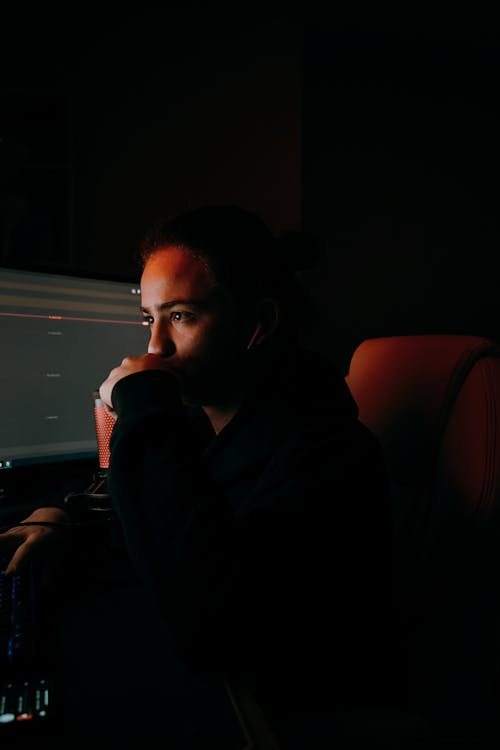
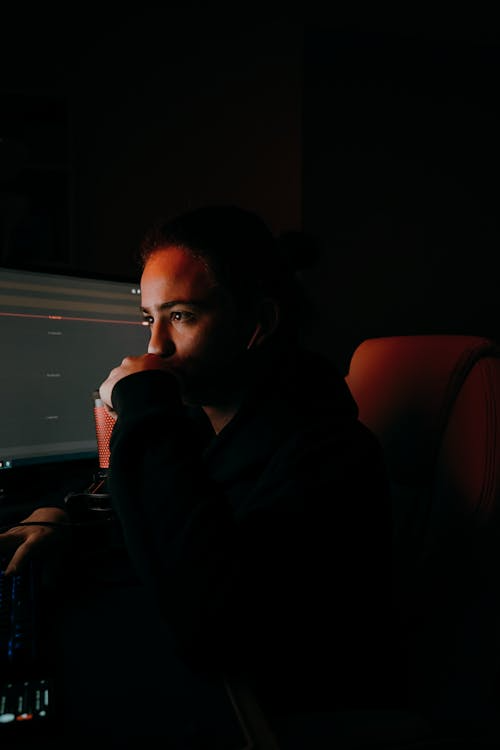
Launchers blink with red dots, limited-time offers, and “last chance” event banners. Streams roll highlights on one screen while social feeds scroll on another. In between the clutch plays and pro replays, ads slide in: new skins, battle passes, even betting promos like x3bet tucked neatly beside esports clips, all whispering the same thing — stay a little longer, don’t log off yet, real life can wait. If he doesn’t draw a line, something else will draw it for him: burnout.
What Burnout Actually Looks Like in a Gamer
Burnout rarely arrives with a dramatic keyboard slam and an uninstall. More often, it wears a quieter face.
He sits down to play and feels…nothing. No real hype, no curiosity about the game’s updates — just a heavy sense of “here we go again.” The loading screen, which used to build anticipation, now just irritates him. Teammates’ jokes land flatter. Voice chat feels loud, not lively.
Little signals start stacking up:
- He hovers over the Play button longer than he used to, stalling for no clear reason.
- He queues out of habit rather than desire. “I guess I’ll play a few,” not “I want to play.”
- Wins feel muted, like ticking boxes. Losses feel bigger than they should.
- After a whole evening “relaxing” in-game, he stands up from the chair more exhausted than when he sat down.
And then there’s the guilt. He thinks, This is supposed to be what I enjoy. That’s how the spiral deepens.
Why His Brain Is Tired of the Game
From the outside, people simplify it: “You just play too much.” But the problem isn’t only time spent. It’s the emotional load stuffed into those hours.
The game has slowly become his scoreboard, his social life, and his escape hatch — all at once.
- Scoreboard: His rank and stats have turned into a quiet verdict on who he is. A good night means “I’m competent.” A bad streak feels like evidence he’s failing, not just in-game but in general.
- Social hub: Most of his friendships now live inside that client. Miss a few nights and he misses jokes, stories, clutch moments. Being offline starts to feel like being absent from his own circle.
- Escape: Work stress, family tension, unanswered messages — he pushes them all behind the glowing screen. The game becomes a place where nothing “real” has to be faced…until that weight seeps in anyway.
Add in endless progression systems — battle passes, ladder resets, daily quests — and he’s in a space where there is always something unfinished. You don’t “complete” these games. You just stop, and stopping starts to feel wrong.
Burnout is what happens when his inner battery is running on fumes and the only strategy he knows is “charge by playing more.”
The Quiet Turning Point: Saying the Hard Part
The real shift doesn’t happen in a rage-filled 3 a.m. queue. It happens in a small, honest moment.
At some point, he admits — if only in his head:
“I’m burned out on the way I’m playing right now.”
Not “I’m done with games forever.” Not “I’m weak.” Just: this setup, this relationship with gaming, is draining him dry. That sentence sounds simple, but it breaks a lot of quiet lies:
- “If I just grind harder, the fun will come back.”
- “Real gamers don’t need breaks.”
- “If I slow down, everyone will leave me behind.”
Once he sees those for what they are — fear, dressed up as discipline — he can do something different.
A Recovery Plan That Doesn’t Require Uninstalling Everything
He doesn’t need a dramatic detox to heal. He needs a smarter deal with himself.
- Take the pressure off the mode, not the hobby.
Instead of forcing rank every night, he shifts into casual, normals, story modes, or even entirely different genres. He gives himself permission to log in and play around, not always “perform.” The point isn’t to erase his competitive side; it’s to remind his brain that games can be light again. - Insert brakes into the autopilot.
Burnout loves seamless loops: game → queue → game → queue. He breaks that flow with tiny rituals:
- After each match, hands off keyboard and mouse for 30 seconds.
- A simple question: “Do I actually want another game, or am I just avoiding something?”
- A fixed “last game” time — say 23:00. After that, no new queue, even after a win streak.
It feels awkward at first, like hitting a manual override. But those awkward pauses are where his choices come back online.
- Let his mind rest somewhere that isn’t a loading screen.
He doesn’t need a new personality. He needs other places to breathe. That might mean:
- A short walk with no headphones, just letting thoughts wander.
- Light exercise — not a heroic gym grind, just movement.
- Something with his hands: cooking, fixing small things at home, drawing badly on purpose.
The goal isn’t self-improvement. The goal is proof: comfort exists away from the glow of the monitor.
- Rewrite the story in his head.
As long as his inner script says, “If I’m not grinding, I’m losing,” burnout will wait for him like a queued match. So he starts editing that script: