
 Face swapping in videos is now one of the most interesting and talked about techniques in video editing. Changing faces is a very interesting task when it comes to creating funny social media clips. Various methods have come up over the years for this task, and each has its own advantages and disadvantages. Here I will discuss seven main techniques of face swapping.
1. Traditional frame-by-frame face swapping
This is where it all started. When there was no AI, editors used software like Adobe After Effects to swap faces frame by frame. That is, in each frame, parts of the previous face were manually (by hand) replaced with the new face and adjusted according to time.
You have complete control over this method, so the work can be perfect and customized to your liking. If you want to do a lot of perfect work, it gives great results. However, it is very time-consuming and requires a lot of skill to do the job. So it is not suitable for quick work or beginners.
2. AI-powered face swapping software
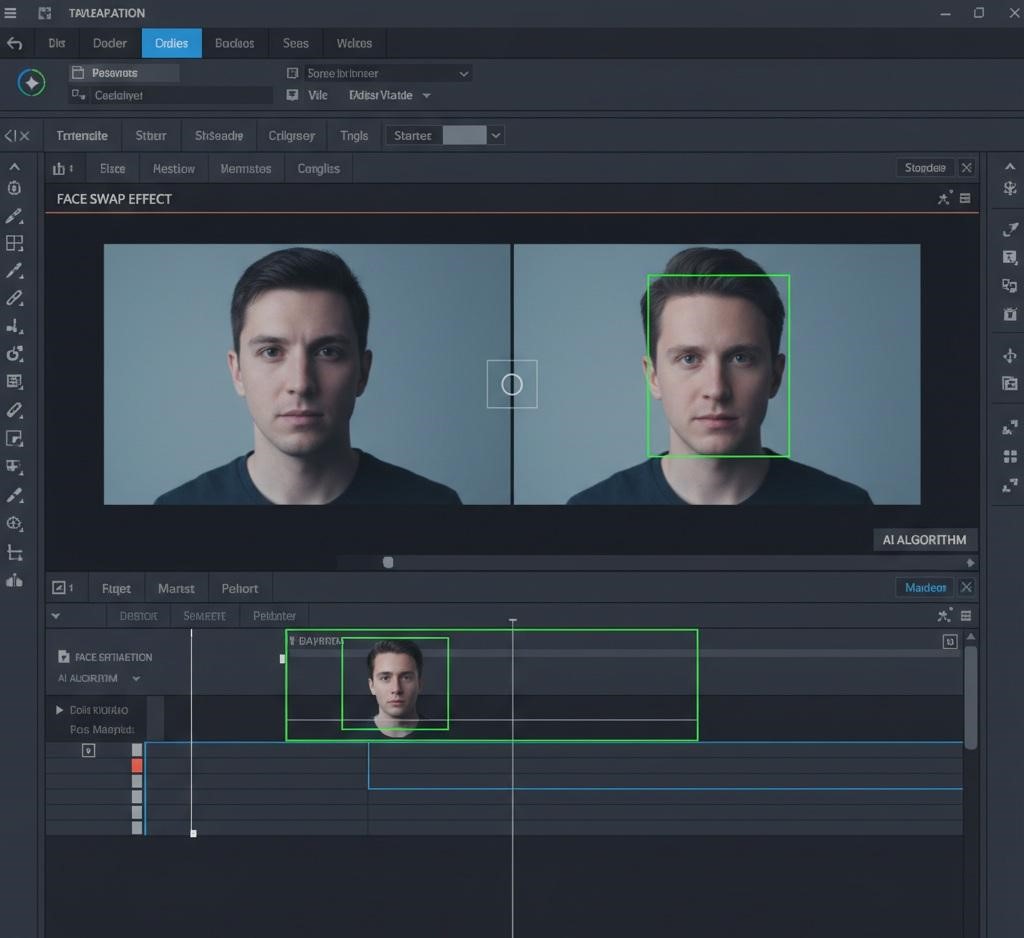
With the advent of AI (artificial intelligence), most of the face swapping tasks have been automated, changing the entire process. These softwares use special algorithms to detect faces, map facial features, and replace them with other faces. This requires very little user input.
The biggest advantage of these face swap ai softwares is speed. What used to take hours can now be done in minutes or seconds. If the source video quality is good, the results are also quite realistic. One thing to remember is that AI is not always perfect. The swapped face can sometimes shake, distort, or not track movements smoothly, especially if the original video has high speed or low lighting.
3. Real-time face swapping via webcam or mobile app
You must have seen apps that allow you to swap faces with friends instantly using your phone or webcam. These apps detect live faces and swap faces as you record or stream video.
It’s great fun for live chat or social media stories and easy to use for everyone. Since it works in real time, the results may not be as smooth or high-quality as videos created offline. Also, you have less control over small things like lighting or facial expressions.
4. 3D Face Mapping and Tracking
This technique uses 3D modeling to map the entire structure of a person’s face. As the person moves or expresses different emotions, key points on the face are tracked. It’s like creating a virtual mask that fits perfectly over the real face and moves with it.
This method is used in movies and high-quality visual effects (VFX). Because it makes the swapped face look much more natural and dynamic expressions, head movements, and skin textures look accurate. However, it is quite complex and expensive. It requires powerful hardware, software, and a lot of expertise to do this job properly.
5. Deepfakes for face swapping
Deepfakes are technologies that use advanced neural networks and machine learning to create incredibly realistic face swaps. They analyze thousands of images and “learn” specific facial features, expressions, and movements, which makes it possible to create highly believable swapped videos.
This technology involves serious ethical issues. Because it can be misused to spread misinformation, fake news, or violate personal privacy. In addition, creating a deepfake usually requires a lot of computing power and time.
6. Morphing and Blending Techniques
Sometimes, instead of just a clean cut-and-paste, two faces are morphed (gradually transformed) together and the features are smoothly blended. This creates a gradual transition or blending effect between the two faces, which can be artistic or somewhat unrealistic. This method can look unnatural if the facial features and lighting are not properly matched.
7. Background and Lighting Matching
An important but often overlooked part of face swapping is lighting and background matching. Even the best swap will look fake if the lighting or color tone between the swapped face and the rest of the video is not right. Skilled editors adjust colors, adjust shadows, and, if necessary, digitally recreate the lighting so that the face blends into the new environment.
Last word
There are now many tools and techniques for swapping faces in video, to suit different skills and budgets. While traditional methods give you creative control, they require patience. AI and deepfakes speed up the process, but can sometimes lack consistency and raise ethical questions. If you’re new, you can use an ai face swap video tool for quick experiments. As you gain experience, move on to 3D mapping and manual editing for better results. Always remember, face swapping should be used ethically, respecting the privacy of others and not creating anything misleading. When done correctly, face swapping can be a powerful creative tool.