
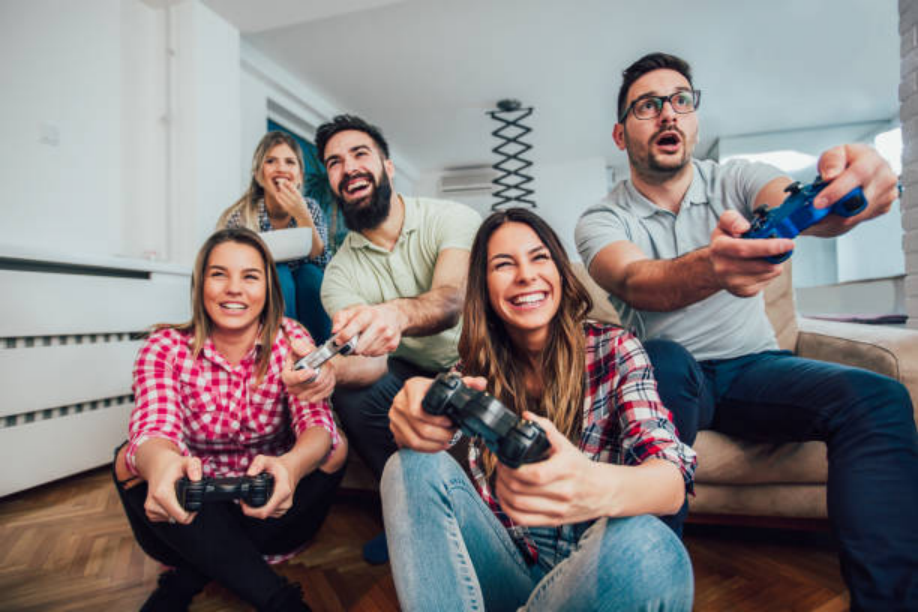
Gaming has never really been a solitary thing, even when it looked like one. Before online platforms existed, people gathered around consoles in living rooms, crowded into arcades, and swapped tips through magazines that took a month to arrive.
Community events built around traditional activities, from local tournaments to the shared excitement of a Perya game at a town fair, showed early on that the social side of play mattered as much as the game itself. The internet did not invent that instinct. It just gave it somewhere much larger to go.
What followed was one of the more significant shifts in how entertainment actually works. Online communities grew up around games and changed not just how people play but how games get made, how long they last, and what it means to be part of a gaming culture at all.
The Early Days of Online Gaming Communities
The first online gaming communities looked nothing like what exists today. Message boards and dedicated fan forums were where players gathered, slow by modern standards and limited in reach, but genuinely useful. Before tutorial videos and official strategy guides became standard, those forums were often the only reliable source of help when a player got stuck.
There was something particular about those early spaces. The people contributing had no incentive beyond helping others who were working through the same problems. Knowledge was shared freely and the act of helping built a kind of community identity that felt distinct from just playing the game alone.
When online multiplayer arrived and players could compete and cooperate directly inside games rather than just discussing them outside, those community structures grew significantly. The conversation moved closer to the game, and the community became part of the experience rather than a supplement to it.
The Rise of Social Gaming
Platforms like Discord, Reddit, Twitch, and YouTube changed the scale of what gaming communities could look like. Players no longer needed to find a dedicated forum for a specific game. They could find communities organised around a genre, a play style, a content creator, or a single memorable moment from a game released ten years ago.
Live streaming added a dimension that forums never had. Watching someone else play in real time, reacting alongside thousands of other viewers, turned gaming into a spectator activity with its own culture and dynamics. The person playing became as much a part of the experience as the game itself.
For many players, the community now comes before the game. They follow a creator or a Discord server and pick up games because of the group around them, not the other way around. That shift says something significant about what people are actually looking for when they sit down to play.
Communities Help Games Stay Relevant
A game without a community tends to fade quickly after launch. The news cycle moves on, the player count drops, and within a few months it is hard to find anyone still talking about it. Active communities change that pattern substantially.
Player-created content, guides, mods, fan art, and community events give a game a reason to keep existing in people’s attention long after the initial release window closes. These contributions are not just nostalgic. They actively bring in new players who might never have encountered the game through conventional marketing.
Developers have noticed this and adjusted accordingly. Studios that maintain active dialogue with their communities, responding to feedback and incorporating player suggestions into updates, tend to hold their audiences more effectively than those that treat launch as the end of the conversation. The community has become part of the product cycle rather than something separate from it.
The Growth of Competitive and Cooperative Experiences
Online communities created the infrastructure for competitive gaming to grow into something organised and accessible. Before these communities existed, competitive play was largely limited to local tournaments or professional circuits that most players had no path into.
Community-run tournaments changed that. Players with no professional connection could organise and compete in structured events, develop real skills, and build reputations within their community. The gap between casual and competitive play narrowed because the community built bridges between the two.
Cooperative communities developed alongside the competitive ones. Groups focused on helping newer players, organising social play sessions, and creating welcoming environments for people who wanted company without pressure became just as established as those built around rankings and results. Between those two poles, modern gaming culture found a range wide enough to accommodate almost anyone.
Traditional Games in the Digital Era
The impact of online communities did not stop at video games. Traditional games that depended entirely on face-to-face gatherings found that digital platforms could carry a surprising amount of what made them worth playing.
Classic card games, board games, and cultural pastimes that once required everyone to be in the same room have found new audiences online. Community features built around these digital versions, chat systems, leaderboards, organised tournaments, and social groups, recreate enough of the original social texture to keep the games feeling like genuine experiences rather than pale imitations.
This has preserved games that might otherwise have struggled to reach younger generations. When the community around a traditional game is active and welcoming, new players have a reason to learn it. The game becomes part of a living culture rather than a historical curiosity.
Looking Ahead
The direction is not hard to read. As communication technology improves and new platforms emerge, the role of community in gaming will likely expand further rather than contract. The tools for connection keep getting better and the appetite for shared experience does not seem to be going anywhere.
What started on message boards with a few hundred dedicated players has grown into interconnected networks that shape what games get made, which ones survive, and how they are talked about for years after release. That is not a minor development. It changed the structure of an entire industry.
For most players, the community is no longer something that surrounds the game. It is part of why they play at all. The friendships, the discussions, the shared moments around a particular game or genre carry their own value independent of any specific title. Gaming culture built that. Online communities are what made it possible at scale.